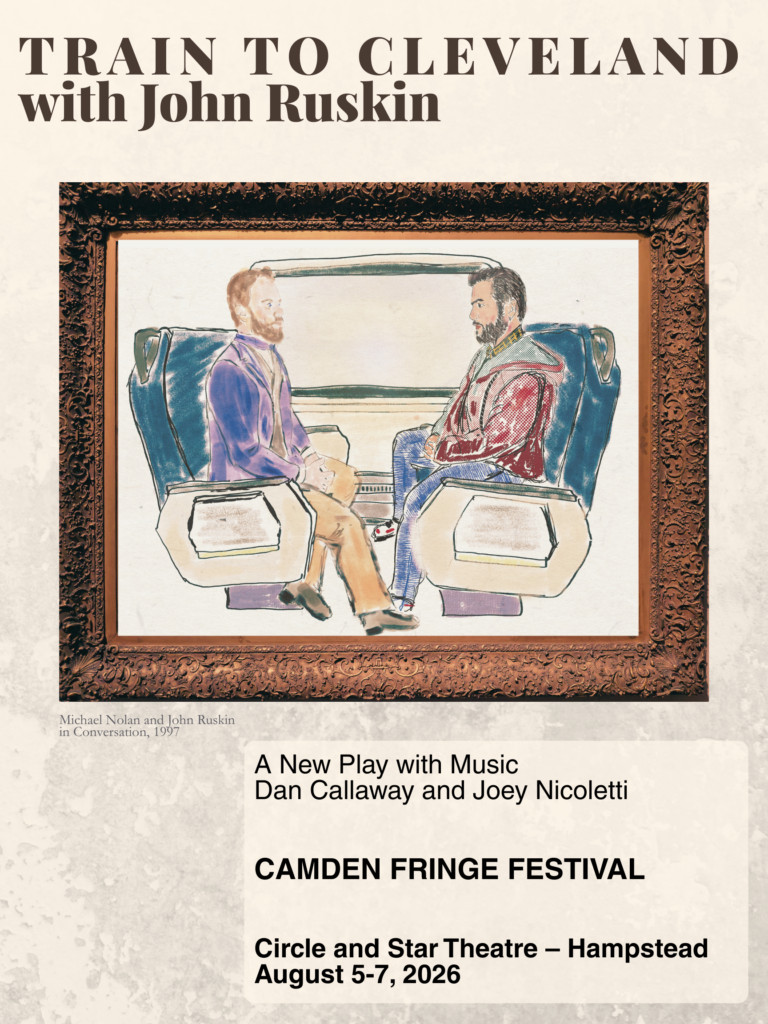
A new play with music by Dan Callaway
A burnt-out PhD student boards a train home in 1997 and finds himself face to face with Victorian art critic John Ruskin.
What starts as an argument about Turner, ambition, and artistic truth becomes a reckoning with illness, love, and whether beauty can still reach someone who’s spent a lifetime trying to earn his worth alone.
Camden Fringe Festival 2026
August 5–7
Circle and Star Theatre — Hampstead
About the Play
Set over the course of a return train journey in 1997, Train to Cleveland with John Ruskin blends music, memory, humor, and unexpected cross-time encounter.
Michael Nolan is days away from defending his dissertation while trying to hold together a life constructed on endurance. His mother is about to lose her home. If he doesn’t complete his defense by the deadline, he’ll lose the job that provides the health insurance he desperately needs. And while he races to save everything else, the woman he loves wonders whether there’s any room left for her.
Then John Ruskin appears.
What starts as an argument about art becomes something more personal. As the journey unfolds, Michael has to confront the cost of carrying everything alone.
This intimate play with music explores ambition, caregiving, inherited patterns, and the frightening vulnerability of allowing yourself to be loved, supported, and changed.
Why Ruskin?
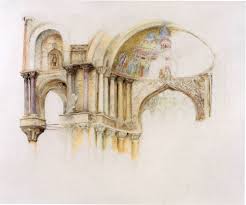
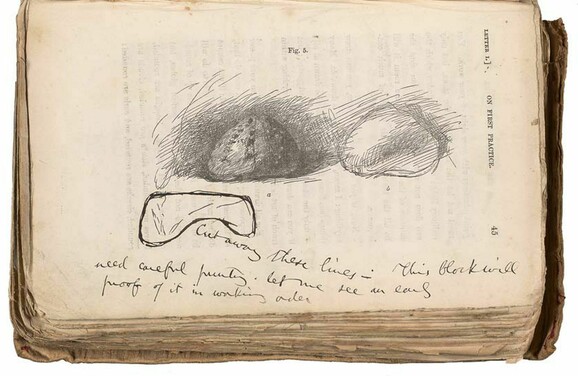
John Ruskin was one of the most influential art critics of the Victorian era: a fierce defender of painter J.M.W. Turner, a social critic, teacher, moral thinker, and deeply contradictory man.
In this play, Ruskin becomes a companion, adversary, and mirror to Michael.
Music and Style
The musical storytelling inTrain to Cleveland with John Ruskin draws from singer-songwriter traditions alongside traditional folk textures; Ruskin’s sung material comes from poetry by William Wordsworth.
Intimate and emotionally immediate, the play explores ambition, caregiving, isolation, and the vulnerability of allowing yourself to be helped.
Field Notes: Making the Play
Behind-the-scenes notes on the making of Train to Cleveland with John Ruskin: readings, rewrites, music, Turner, Ruskin, and what we’re learning along the way.
Art and Turner
First Table Read — Finding the Heart
May 2026 – Table Read at Boston Conservatory
The first public reading of Train to Cleveland with John Ruskin helped clarify the play’s emotional center.
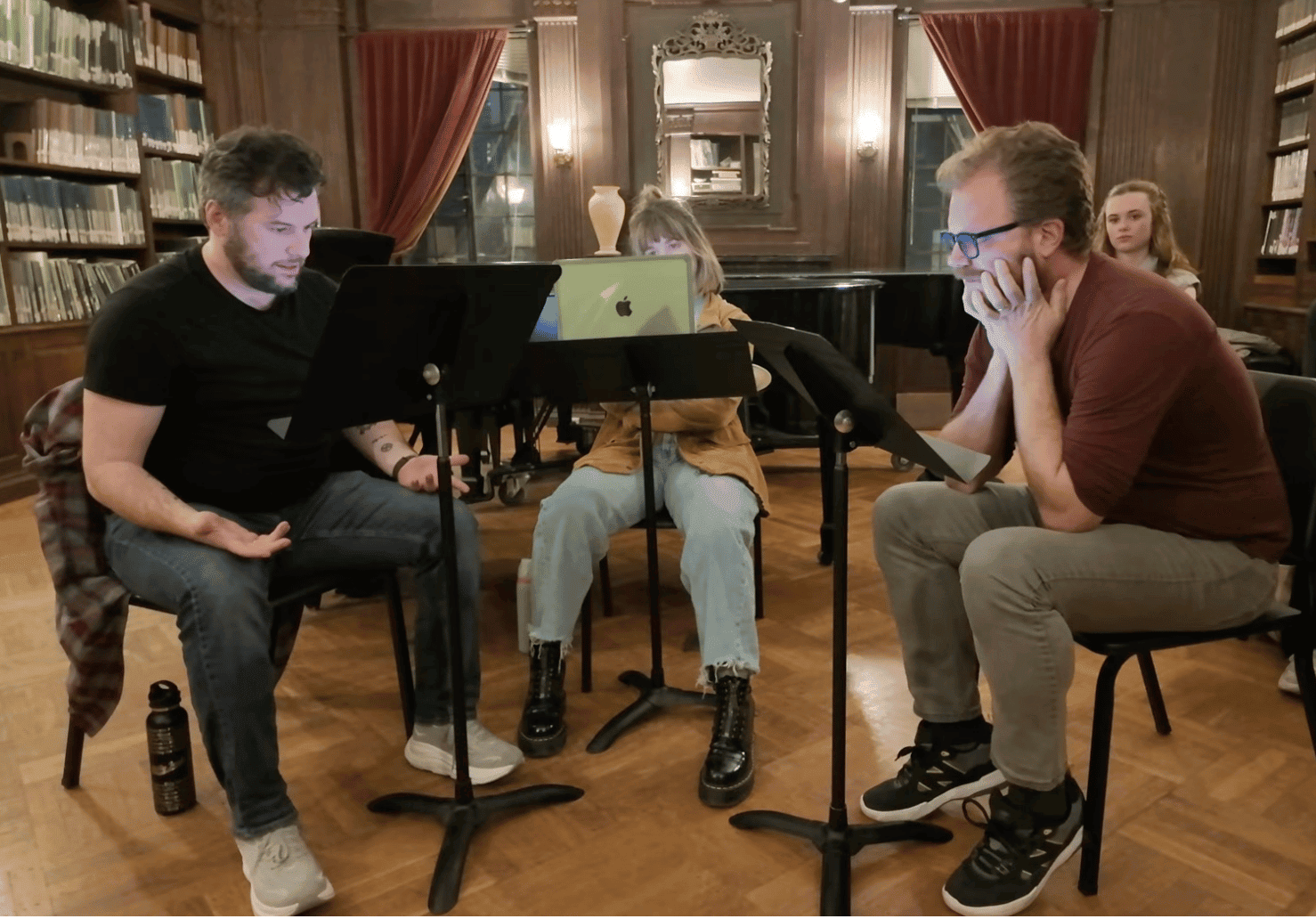
While the story begins with arguments about art, listeners responded most strongly to the relationships underneath them: Michael’s growing distance from the people who love him, his exhausting need to carry everything alone, and the unexpected tenderness that develops between Michael and Ruskin over the course of the journey.
The discussion afterward pointed toward the next phase of development: trimming and sharpening the more academic passages so that the story can move more fully through conflict, humor, vulnerability, and human connection.
We now move toward an on-its-feet workshop in June and continued musical development ahead of its Camden Fringe premiere. 🙌
Building the Play
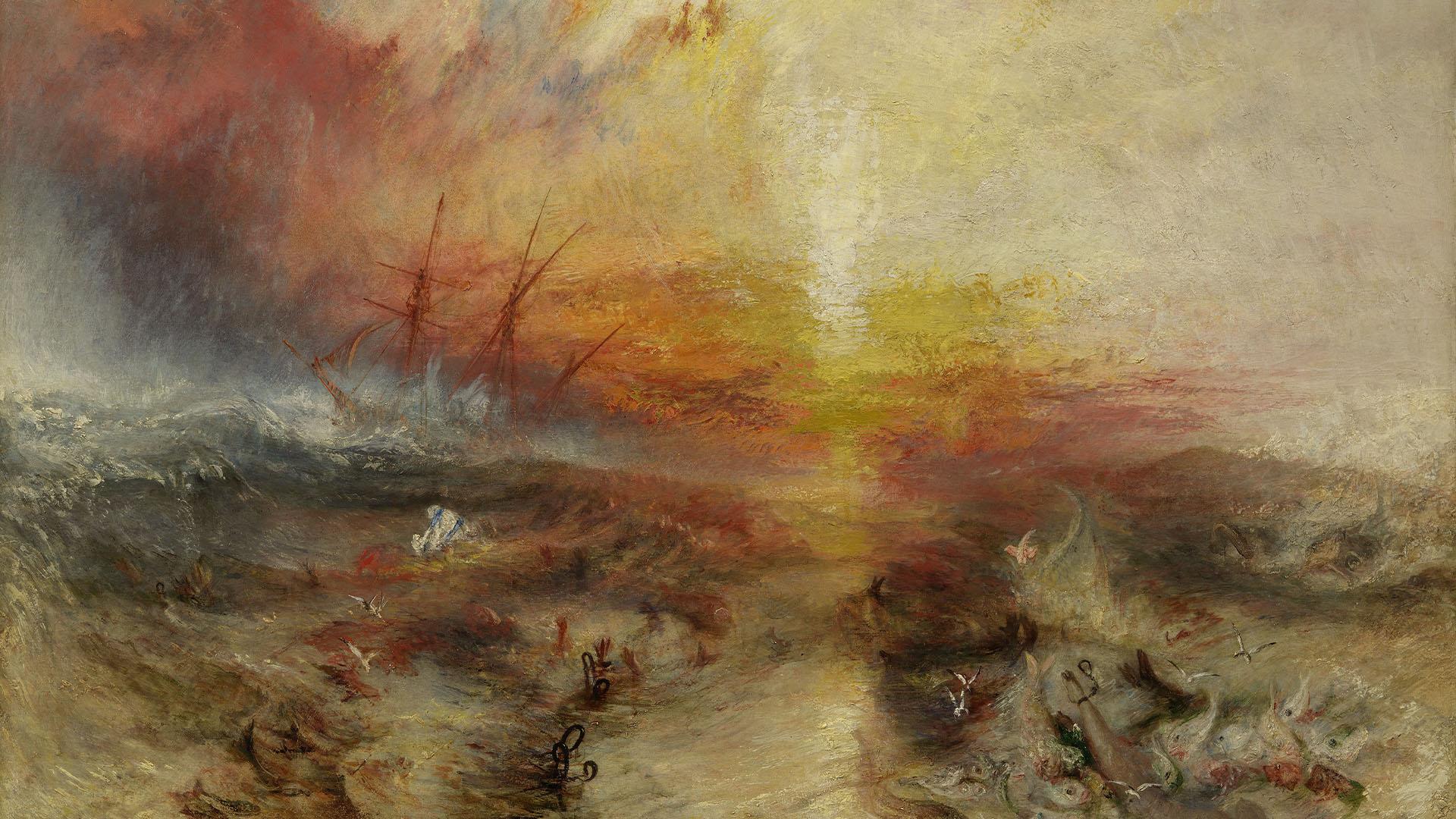
The Slave Ship — Learning to Look
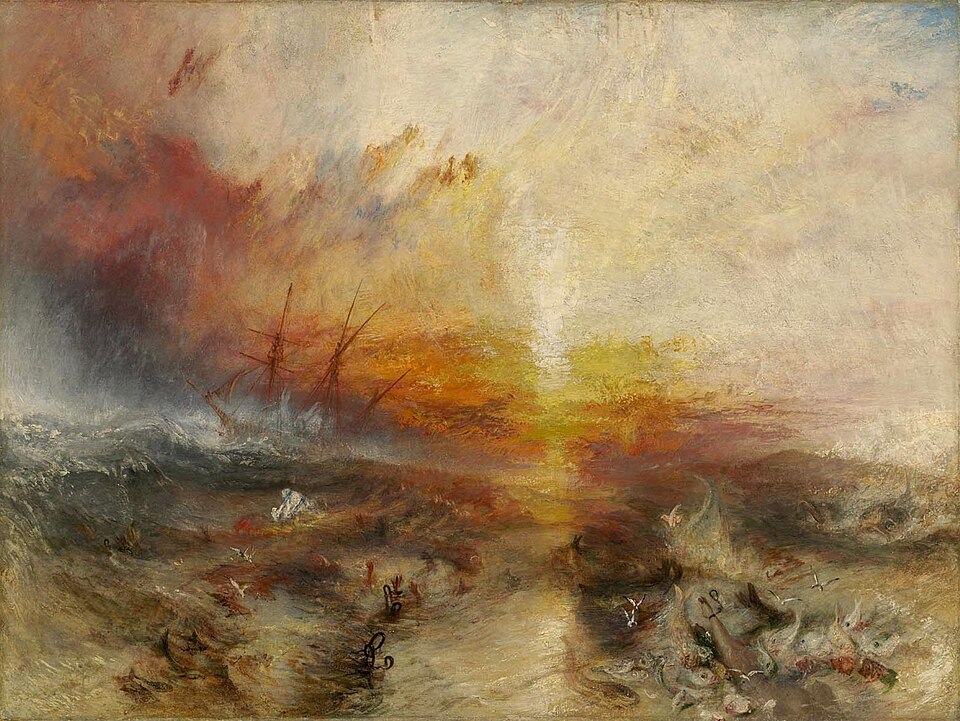
I learned about J.M.W. Turner and how to look at paintings from Professor Hilary Guise.
Standing in the middle of a gallery she’d call out, “No, no. You must come to the centre. Like you’re in the theatre. Not from the sides of the stalls. The centre.”
She taught us to slow down and see. Years later, I was walking through Boston’s Museum of Fine Arts when I spotted this painting from across the room.
“That’s Turner! What a sunset,” I thought. “What a storm.” Then I walked closer. I saw the foreground.
I read the title. Slave Ship
Turner painted it in 1840, inspired by the massacre aboard the slave ship Zong in 1781.
After a navigational mistake, the captain ordered more than 130 enslaved Africans thrown overboard so their deaths could be claimed as an insurance loss rather than a financial loss from disease. The legal case that followed treated human beings as cargo, and no one was held criminally accountable.
I stood there for a long time. Somehow Turner had painted sublime beauty and incomprehensible human evil in the same image. The longer you live, the more that both/and paradox shows up.
It’s one of the reasons this painting became the center of Train to Cleveland with John Ruskin. The protagonist is drawn to Turner for the same reason: the beauty and horror together at the centre on one canvas.
Megan’s Notes — What the Play Was Telling Us (Dramaturgy, you say??)
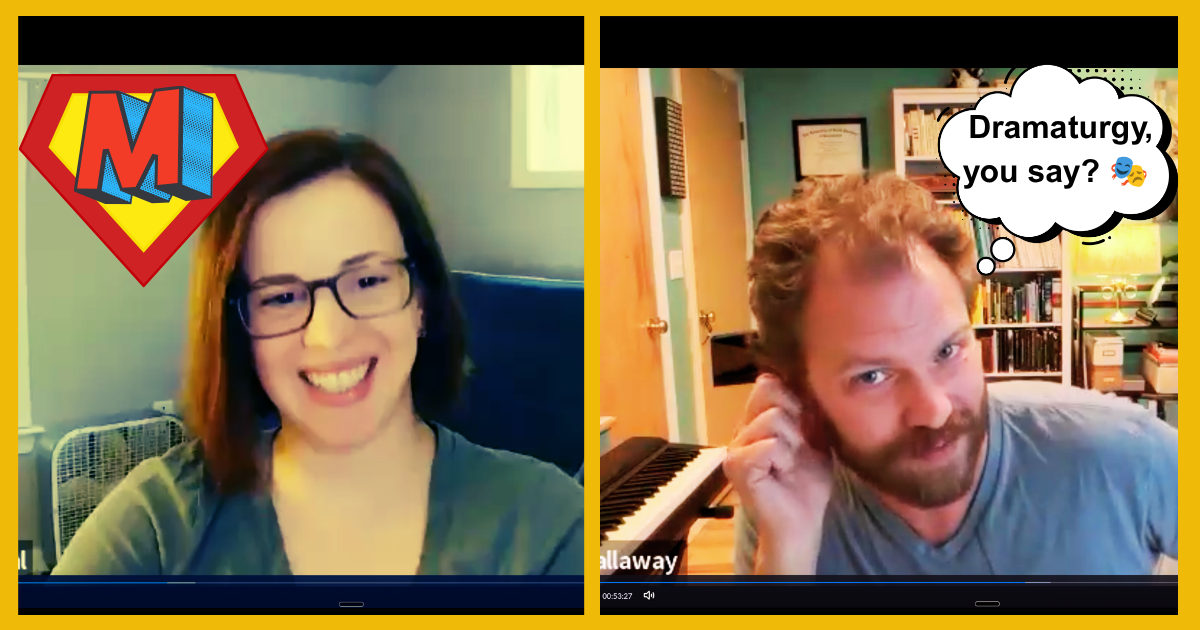
This is why we’re so lucky. This is Dr. Megan Stahl, Associate Professor of Theater at Boston Conservatory, and we get to be her colleague. Megan’s sharing her insight and skill with us by serving as dramaturg* for TRAIN TO CLEVELAND WITH JOHN RUSKIN.
When someone can help you zoom out and see the story forest when you’ve been examining the patterns in tree bark for several months, it’s a huge relief and perspective shift. It’s also helpful to have someone say, “Maybe don’t give your protagonist a page-and-a-half monologue all on a telephone.”
Megan’s helping us craft the script for next week’s staged reading here in Boston, and I couldn’t be more grateful.
This play’s about somebody learning that maybe they’re, in fact, not alone and can open to receive help. As a creative, I’m finally starting to let that lesson hit my own heart.
The stories you write often tell you what you’re learning, just like the technique you teach shows you the lessons you most need. Often, when you look up, you see a few folks around ready to help, but you were so busy telling yourself no one’s coming that you didn’t notice.
*A dramaturg is a literary and theatrical expert who advises on the script, historical context, and structure of a play. They help ensure the production is coherent, grounded, and communicates its intended message to the audience.
To Mutton Chop or Dumbledore?
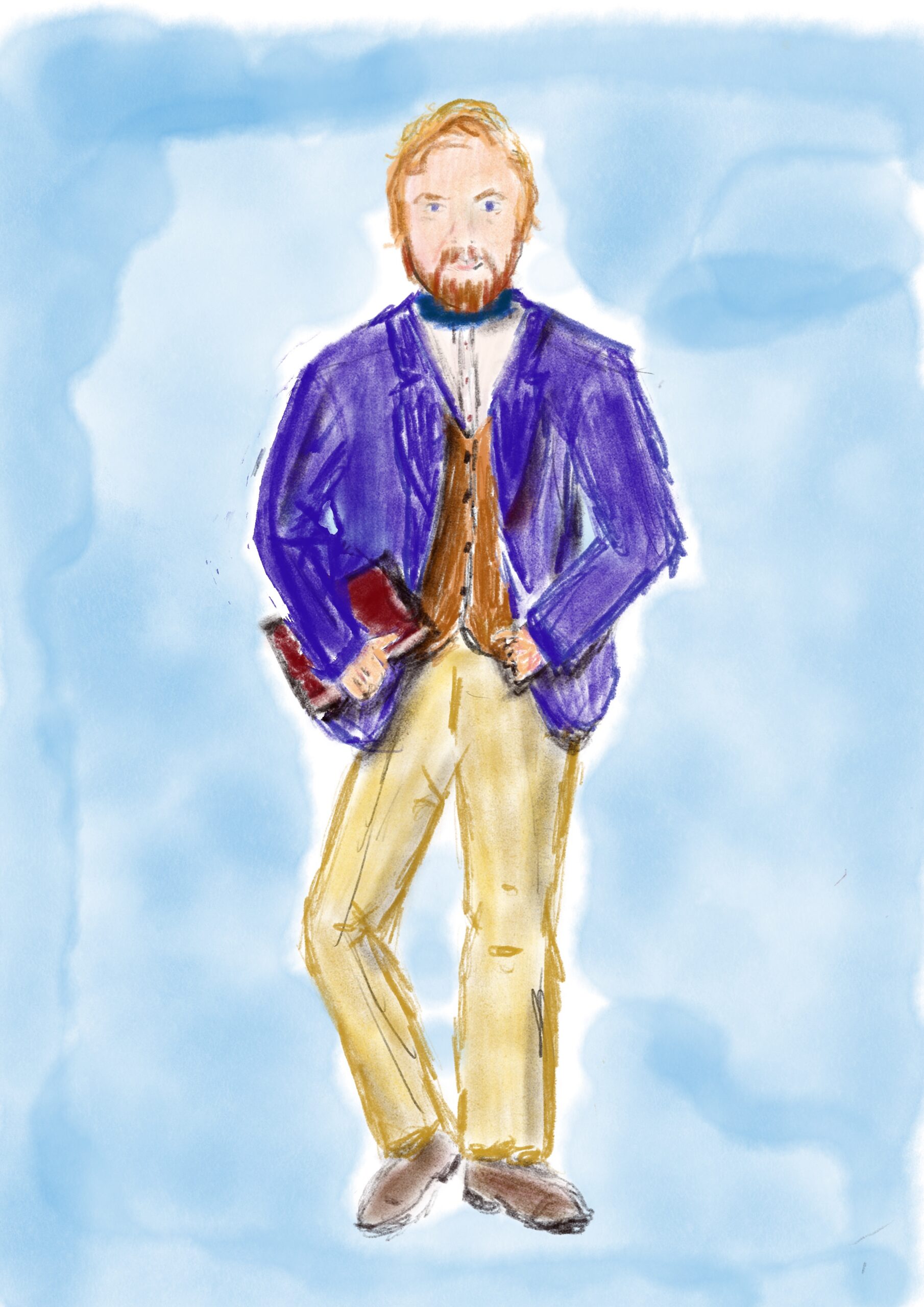
Been thinking about what a Victorian art critic/polymath might wear if visiting a burnt-out PhD student in Massachusetts from heaven in 1997.
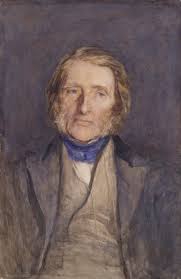
Many John Ruskin portraits feature deep mutton chops. Later in life, it was full wizard beard. I’ve elected to land at a midpoint — full beard considering potential wizardry.
There was one portrait of him with a vibrant blue cravat which I hope we can recreate for the play. Ruskin reportedly hated black and loved color.
I’m sourcing the costume for the August production from the Royal Shakespeare Company, so I’m looking forward to that fitting :). I’ll follow up with images in July so you can see what we decide.
Artist Bios

Dan Callaway is a writer, performer, and teacher based in Massachusetts. He serves on the faculty of the Boston Conservatory at Berklee, where he teaches musical theatre voice and vocal pedagogy.
His work explores the intersection of art, memory, spirituality, and human relationship through intimate theatrical forms. Train to Cleveland with John Ruskin grew out of a fascination with 19th-century artistic figures, chamber-scale storytelling, and the emotional cost of trying to carry life alone.
As a performer and educator, Dan has worked extensively in musical theatre, contemporary voice training, and collaborative performance-making. He is especially interested in creating actor-centered work that can live equally well in small rooms and larger theatrical spaces.
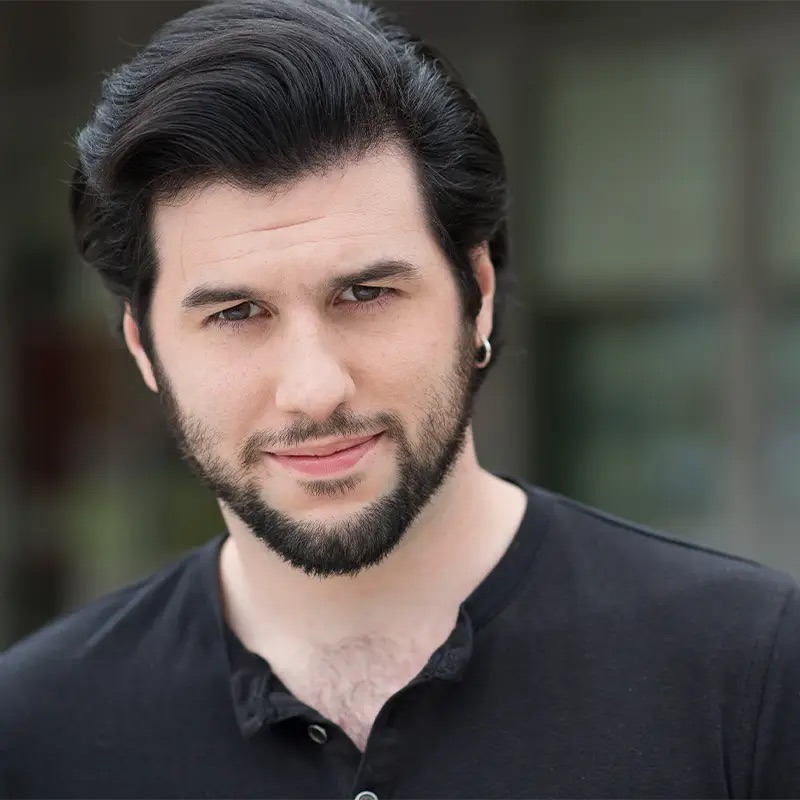
Joey Nicoletti is a Boston-based performer, teacher, and collaborative artist originally from Ohio. He recently completed his MFA in Musical Theater Vocal Pedagogy at the Boston Conservatory at Berklee where he currently serves on the faculty.
His work spans musical theatre, concert performance, music direction, and voice pedagogy, with a particular interest in emotionally grounded storytelling and the relationship between technical precision and human vulnerability.
In Train to Cleveland with John Ruskin, Joey originated the role of Michael Nolan and has collaborated closely in shaping the play’s musical and theatrical language.
Follow the Journey
Receive updates, rehearsal notes, music previews, and future productions. Just pop your email in below.