One of the biggest lies singers suffer from believing is that there’s something inherently wrong with your voice because you’re struggling with cracking or your voice making abrupt transitions where you want them to be smooth.
There are tons of factors that affect why this may be happening, but an understanding of vowels and your vocal tract shape goes a long way in helping you navigate tricky places.
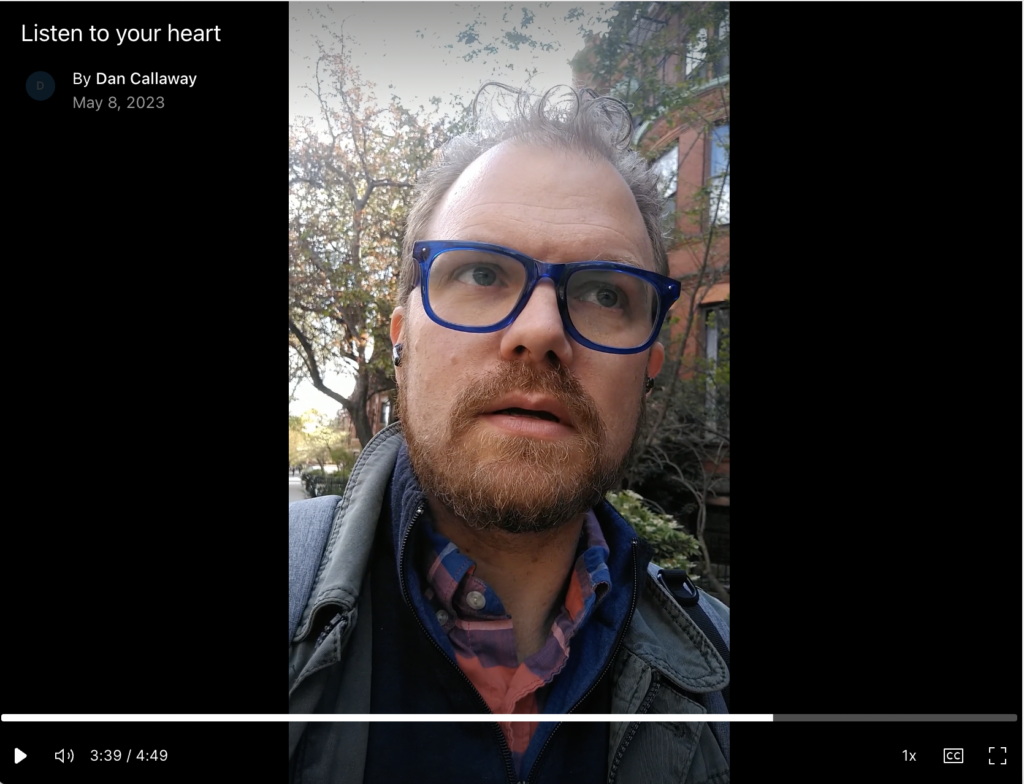
In this video, I’m going to break down two vowels that are major culprits in causing vocal squeeze and cracking — [i]/ee and [u]/oo.
In upcoming videos, I’ll tell you about vowels that almost always help with thicker fold modes in the higher notes, as well as other things to check like body use and breath management if you’re struggling with abrupt vocal breaks where you’re wanting the register to remain consistent.
I got to sing “Marry Me a Little” in a production of Putting it Together at South Coast Repertory about 12 years go, and one night I cracked. Bad.
If you know the song, it’s at the end when it goes “Sooooomeooooone!”
It was an A-flat. Emotion had choked me up, and I was surprised by a sound that came out of my face not unlike an adorable video I saw recently of a donkey reunitng with the girl who raised it as a foal.
The performance was connected and honest, so I moved on.
BUT, the next night you know what happened.
Oh no. Here comes that note. Why did it crack last night? How do I KEEP it from cracking tonight? More space? More breath? More everything? Yes. More everything. Go!
And, crack again. Only this time self-conscious and NOT connected.
[Enter singer neurosis death spiral.]
There was even a review on a ticketing site lamenting how I started the song so well but just didn’t have the chops to finish it.
(Another reviewer said I was upstaged by my mullet haircut — I didn’t even know I HAD a mullet. They’re in again, right? Or is that over?)
(I guess I was getting a little “party in the back” there.)
Anyway, I didn’t know what the problem was. I didn’t know how to leverage physiology and acoustics to ensure I wouldn’t surprise an audience like a screaming goat video.
And this wasn’t an isolated incident.
I’ve cracked like a wounded beast singing an aria in a grad school concerto competition hearing.
I pummeled myself with merciless self-talk through many undergrad productions,
and I even cracked once when I sang “I feeeeel you, Johaaaaannnnaaaaaa!” with the orchestra all blasting during a Sweeney Todd in LA. (A musical director I worked with later reminded me of the fact as he had been in the audience. So kind.)
So, I’ve felt the pain of the crack.
And I didn’t get clear tools in my own body as to why this was happening until my late 30s. And when I did, I was ready to preach the vocal register acoustic agreement gospel to anyone who’d listen.
One myth singers beat themselves up with is that if they’re cracking or experiencing rough transitions where they want them to be smooth, something clearly has to be wrong with them and their voice. Their instrument is faulty.
False.
While yes, sometimes you may need to make an appointment with a laryngologist and get a scope to make sure everything’s scope-acetic, the vast majority of the time, the events we call cracks or breaks happen because of one of two things:
Register confusion
&/or
Vocal tract shape.
With register confusion, you’re unfamiliar with the categories of sounds your vocal folds make, and you don’t have a ready recognition of what they feel and sound like inside your own head.
And with vocal tract shape, that just means that the different parts of your throat and mouth have a direct effect on what’s going on in the vocal folds.
(and PS, different registers only cooperate with certain vowels. Some folks say [i/ee] is their favorite vowel, but it’s not going to love you back on every note in every mode.)
It’s enough to get your ears and brain all twisted in a knot, so this week, I’m going to break down the most common snags we hit when it comes to understanding registration and how to collaborate with physics and your physiology.
(It’s almost always counterintuitive and opposite your brain’s perception of what needs to happen.)
The takeaway from this is that almost any technical snag you hit is solve-able, and if you have an evidence-based solution to try, you can show up on a consistent basis, try the thing, and then you get better.
Now apply this vocal truth to your wider life. I’m working on it, too.
Example: I sat down to structure a teaching and class schedule for the summer, and my body got all hot, I broke into a mild sweat, and my heart rate went up.
A deep deep part of me that fears making a decision and going with it was responding. Still don’t understand it all, but I was like, “Oh, there’s something deeper holding me back from finishing this very practical task.”
That’s often the way.
And the good thing is that when you just start taking small, practical actions, deeper things unearth themselves in their own time. It’s when you’re in action dunked in sweet compassion that things become clear.
So, join me on the YouTube (or Instagram or Facebook), I’ll be posting this info on all of the human psychology manipulation platforms.
In the meantime, sing something, please ?. Because there’s only one you, and folks need to hear the story only you can sing.
The musical language of a song has so much to tell us about what’s going on inside the character. It’s one of the richest places to look for clues about what’s happening in your internal weather.
When you’re aware of what the composer’s up to, just listening to the collaborating music does so much work for you.
After this layer of work, you’re more than ready so slip in behind the character’s point of view — to use the information you’ve gathered about their life and their circumstances and the musical language to then take a look from behind their eyeballs.
After you’ve done your preliminary objective work about the material, you’re ready to see how the images in the narrative connect to you personally and on an authentic level.
In this video, I’ll walk you through a few phrases from Sunday in the Park with George to show you the first steps of crafting your own intimate imagery world, and to start to get the images of the song into your own heart so that when you sing it, it’s coming from inside your own experience.
There’s really nothing more captivating than a human sharing their heart in story and song, and I found this way of working to be very straightforward, satisfying, and useful.
It’s also one of the most direct ways to let your body teach your voice what to do moment to moment and style style.
Jude (Nugget #2) and I had an epic Friday morning.
We took Noah to farm school (that’s what we call his barnyard preschool.) Here he is petting a chicken.
The world would be a better place if we all went to farm school.
Then Jude and I headed to his favorite place: Dunkin’.
The other day Jude told Melissa and me that he wished Dunkies was his home.
We’ve gone all in on our New Englander identity. ?
There’s a crew of retired folks who congregate at our local Dunk’s, and Jude’s cultivated a deep friendship with one couple in particular, George and Ann.
After a breakfast sammie and half a strawberry sprinkle donut…
…we headed off to the Market Basket.
Normally, I brace myself for Market Basket. It gives me Costco intensity in a more concentrated environment with pallets-full of to-be-stocked marinara making aisle negotiation super high-stakes.
I regularly want to yell, “Calm down everybody!”
But, Friday with my 3-year-old personality bomb sidekick sporting a Deadpool/Hulk cape, I might as well have entered the store with a talking Golden Retriever and Dunkies’ gift cards for EVERYBODY.
Jude and I changed the atmosphere wherever he shoved the carriage. (He pushes, I steer and try to keep my heels out of trajectory.)
I mean, look:
But I did find something out. My biased Southern self who judged these New Englanders as too brusk realized that most people enjoy a friendly hello and some commiseration.
Jude and I were like the dynamic duo of friendliness up in that store.
We picked up the coconut milk for the woman whose Goya eyes were bigger than her arms. We worked out Jude’s superhero identity with a gent by the English muffins. And we said hola to Virgilio stocking the marinara.
I left the store proud of Jude and how he helped. Also thought about my Papa Basil Jessup (Jude’s so much like him) who possessed the same powers of atmosphere shift; he could walk into a depressive, suffocating space and dispel the darkness with a simple, “Well, hello here!”
This Dunkies/grocery trip also reminded me of our privilege as singing storytellers.
There’s no better opportunity to shift the atmosphere than the chance to sing a song and tell a story.
When you prepare with excellence and show up with skill and warmth, the chance to elevate the room is huge.
I want you to remember this wherever you find yourself — in an audition, in a meeting, in rehearsal, in your own practice, in a class, in line at the grocery store. The environment of your soul affects the air around you.
If you’re cultivating love, seeking the most generous interpretation, and holding a quiet vigil of kindness toward yourself, folks feel it. You brighten a day and lighten a load.
A lot of times, you won’t know, and that’s terrific. Warmth and generosity are their own reward.
But remember your superpowers when you start to believe you’re at the mercy of something — a grocery store environment, a toxic work situation, or an entire societal construct — you have influence in your immediate sphere.
And the person next to you will be grateful for the reminder about their own influence.
So, use it!
Whose day could you make more beautiful with a kind word or hello? (I mean, be smart and use your Spidey senses ?️ — some folks you wanna love from a distance, it’s true.)
But I’m here to remind you that you have more agency than you realize.
Walk in like you’re partnered up with the world’s most charismatic, strong-willed 3-year old in a Deadpool/Hulk cape and say to the world, “Well, hello here!”
After all, there’s only one you, and folks need to hear the story only you you can sing.
Love much,
Dan
PS Keep an eye out for me on the Instagram, Facebook, and YouTubes this week — I’m gonna lay out some straightforward videos about how to prepare audition packets.
If you missed last week, I talked about choosing songs for auditions. And oh, make sure you hop over to my YouTube channel and subscribe — I’m gonna be talking about more theatre singing tools than you or I will even know what to do with.
I’ve also been cooking up a pedagogical alter-ego who may be making a debut appearance in the coming weeks.
PPS Please tell me you’re on the Ted Lasso train. The good news is that the last episode of the latest season airs tomorrow evening, so if you’re late to the party, you won’t have to wait for the weekly drip. I may go back and watch from the beginning myself.
PPPS Do you know about Brunch with Babs on IG? I love her! I’m making her BLT Potato salad for the Memorial Day cookout we’re going to today. (High of 69 here in Mass, and I am HERE for it. This mild New England spring has fulfilled my New England dreams.)
Before I enter the establishment, I hold a brief meeting with myself.
I say (in a voice not unlike Ted Lasso), “Self, you’re about to look at a whole mess of choices in this laminated culinary novella.
“There’ll be cherry blintzes, Denver omelets, a chef’s salad, and all kinds of things to sling between your choice of toast.
“Now, before you succumb to a decision stupor, I want you to focus. Focus on that one thing that you’re going to want to chew for the next brief chapter of your life, and with laser precision, you’re gonna communicate that choice to the kind human charged with conveying the gastronomic goods to your gullet.
“You won’t even need to look at the menu. It’s a New York Diner! They’ve got everything stuffed into that Mary Poppins bag of a kitchen.
“Now go!”
And before I walk into the diner, the decision’s clear:
Some kind of cheeseburger, fries, and a fizzy water.
Speaking of daunting choices, one of the most paralyzing sentences a singing actor can hear is, “Just sing something that shows us who you are.”
It ranks up there with, “Ok, now be funny.”
Um, so you want me to select a song from the standard musical theatre canon that displays the depth and breadth of my multifaceted humanity?
No prob. Here’s that timeless chestnut from Guys and Dolls, “Take Back Your Mink.”
Auditioning is full of opportunities for second guessing, self doubt, and what I call the brain beehive.
They’re casting Carousel, but I’m kinda right for Beautiful, too. And there’s that track in The Prom, but what if I target Godspell? I know. I’ll sing “I Feel the Earth Move” as Carrie Pipperidge in the style of “Magic to Do.” It’ll make all the sense in the world! ?
Telling someone to sing something that shows who they are is like telling a freelancer to “charge their value.”
You can’t charge your value. You’re invaluable.
And when it comes to showing table people who you are, Walt Whitman already said it: “You contain multitudes.”
So, what do you do?
Here’s a list of questions you can ask yourself to make song selection straightforward. (Also works for monologues, one-person shows, and purchases at Target.)
1. Do you love the song?
Even if you’re a little tired of it, do you have an enduring appreciation and commitment to this tune?
Do you love the text, the story, the melody, the orchestration, its structure, and what you know about its history? This has to be a hell yes before you proceed.
2. Do you love how you sing the song?
Does the song fit you? Are you confident you can sing it with skill and warmth on any reasonably healthy day? Does it highlight the sparkly special features of your voice? Yes? Keep going.
3. Is the song a good choice for the thing your auditioning for?
If you’re going in for a general meeting, the first two questions will go a long way in helping you choose material that’ll lead to a satisfying experience for everybody in the room.
If you’re going in for a specific show or role, ask yourself —
Is this in the same stylistic world as the show?
Does this solve a specific casting problem? (i.e. I’m singing “The Man That Got Away” with Sally Bowles in mind.)
Is this song familiar enough? You want the table people to pay attention to you singing the song, not the song itself.
4. If you’re asked to sing a cut, and you’re almost always asked to sing a cut, keep these things in mind:
Structure your cut with a logical beginning, middle, and end.
Craft your beginning so that it establishes you in the world of the song (short intro or starting pitch).
No matter your character’s arc in the cut, remember it’s a loving act to share this story.
Make sure the ending is satisfying and clear.
If you choose material you love, that you sing well, and you’re solving a casting problem, you’re on your way.
If you fill your singing with specificity and open your heart, the only thing that can happen is that you share the fullness of who you are. It feels a lot like nothing, so that’s why it’s so tricky.
If you’ve answered the above questions well, your song choice itself isn’t going to make or break an audition. If you realize a tune doesn’t work the way you predicted, there are thousands more songs. You can make a new choice.
If it’s you showing up in the song, if you’ve done your work, and you open the door of your heart, the depth and breadth of you will glimmer like the multifaceted jewel you are.
Because it’s objectively and scientifically true:
There’s only one you, and folks need to hear the story only you can sing.
Love much,
Dan
PS Speaking of audition help, you’re not going to find a more clarifying, actionable, empowering, and useful resource than Audition Psych 101. Led by seasoned actor, author, and one-time world’s worst auditoner Michael Kostroff, there’s now an online course version of it. Also a book.
I took his workshop in LA probably 15 years ago when it was Micheal with a stack of index cards in a little theater in Hollywood. I carry so many things I learned from that workshop with me and share them with students now.
Get in his universe and turn auditioning into an exciting and joyful experience. It’s completely possible.
PPS You need help with anything? How about how to pick a song? 🙂 …
…or solving that breathing thing or that vibrato thing or that belting thing or that fatigue thing or that what the hell am I even doing with my artistic life thing? I’m here for you. Book a free session with me. Yep. Free. For a lil while, anyway. Summer’s here and I want to help you out.
Just go to my public calendar and sign up for a time. Whether you’ve worked with me before or not, take advantage of this. I’ll help you out.
Seriously, a free half hour where you can tell me your singing troubles, I’ll give you some things to do and probably mention your pharynx, and you’ll have tools, and that thing will get better. Do it! It’s a no brainer.
Sign up here, or bookmark my calendar URL: https://fons.app/@dancallawaystudio/book
I was going to post today about whether or not you should sing overdone songs at auditions.
That’s a very short email, I realized.
The answer?
Yes, go ahead.
If you sing it great, and it’s right for the thing you’re going in for, by all means sang it.
There’ve been folks who’ve changed my mind about songs because they dared to sing something they loved that was on the apparent do-not-sing list.
(I started re-liking the song “No One Else” from Natasha, Pierre, and the Great Comet of 1812 after I heard current Elon student Sara LiBrandi sing it from her heart at her program audition.)
So, please, if you sing it great, just go ahead and sing it. Things are overdone for a reason.
Now that THAT sigh of relief has left your body, one thing from my heart to yours + a couple of videos.
From my ? ==> your ?: It works out better when you hug the version of you that’s reading this right now.
You might have a new-and-improved avatar of you working on your vision board, and that’s terrific. We love a good goal.
What I’ve found to increase the peace, relief, and ease factor when it comes to getting from A to B, though, is meeting the now-you with love.
Anything you want to change has a story, and it’s much more likely to cooperate with you when you meet it with understanding.
This shows up all the time in the studio —
“Ah! If I could just get my _______ to RELAX!”
I want you to ask yourself the last time someone shouted at you to RELAX! Did it relax you?
Your jaw muscles might like to hold because when you were 9, your body figured out some kinds of expression weren’t safe, so your brilliant brain instructed your chewing muscles to do double duty and keep all that crying the big people called “excessive” at bay.
Now you can’t quite figure out why those muscles won’t just release like your voice teacher tells you to. Meanwhile, those cells are like, “Whadaya mean let go? We been holding on for dear life since third grade!”
Every pattern we adopt has a story.
If you want to change a pattern, take the time to meet the current one with compassion. It might have some useful insight for you.
I’m telling you so I can tell me. We’re in this together.
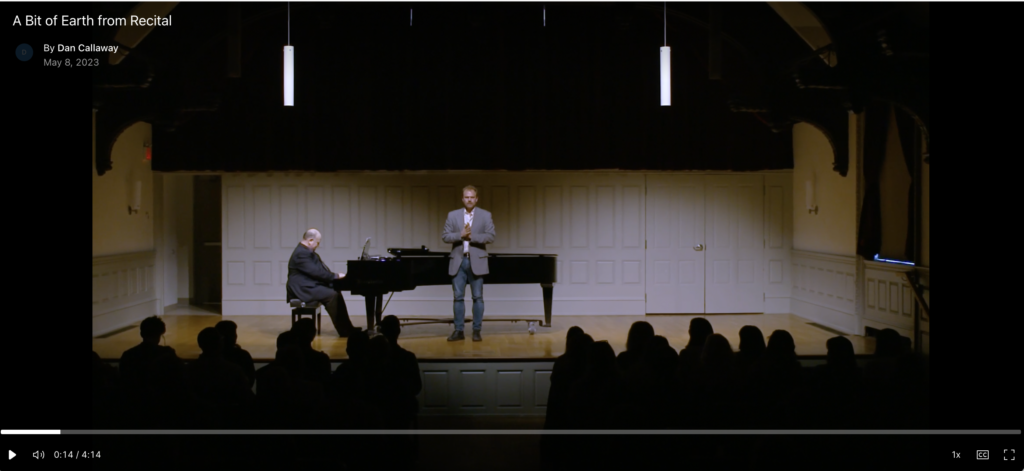
And I put this up on the IG and FB this week, but here’s James May and me making music together at my BoCo studio recital. James is a world class musical director, and I had the privilege of working with him a lot in Los Angeles. This is “A Bit of Earth” from The Secret Garden.
And here’s Jude and me repotting a couple of plants on the deck today.
And always remember — there’s only one you, and folks need to hear the story only you can sing.
By the time I got to college, many folks had told me how gregarious, extraverted, outgoing, and, ahem, charismatic, I was.
I mean, I had provided my Anglo Saxon pentecostal meets Topol impression lens to the role of Tevye in Mt. Airy High School’s production of Fiddler on the Roof, and there were those speech/essay contest blue ribbons I kept pulling down.
The magnetism evidence piled up everywhere.
When I rolled into Elon College’s musical theater program in 1996, I figured I’d keep winning the charisma wars like I had in Surry County.
However, my Dale Carnegie assessment score plummeted at my first musical theatre party.
Who were these people with their signed Playbills, multiple pictures with Bernadette Peters, and cast album CD collections?
And how were they so… so resonant? How could they talk over ALL the other people? And how were they making EVERYONE laugh?
(And why was there smoking? There was so much smoking.)
I didn’t even enter the party attention arena.
In this character shoe cage match, I was a back-row ensemble member still faking time steps. A BYO-Jane Austen novel attendee pretending to enjoy my tepid can of Icehouse in the corner.
Standing out in this environment meant you had to be louder, faster, funnier, and I was outa my league from the get.
We actors get the message early on: You have to stand out!
So, like any logical human, we set out to compete like we’re at a gathering where it’s normal to shout, “a 5-6-7-8” and three quarters of the room bursts into the opening sequence of A Chorus Line.
Once you start to compete, though, that’s the moment you get lost.
And I mean this in two ways.
ONE. You get lost in a crowd.
In college, after I learned what a jazz shoe was, I started to pick up a thing or two about dancing.
One thing I never really conquered, though, was trusting myself to pick up choreography.
I always watched the better dancers to double check that I had it right.
And that put me a half-count behind.
It also meant that my attention was on the dancer I’d decided was better than me and not on my own work.
If you’re busy looking around you to compare and follow, there’s no way you can get down into your own work and find out what your own point of view is.
Don’t get me wrong. Look around. Notice who you admire. Take in their influence.
But your work is about sharing what rings authentically in you, not scanning outside trying to crack a code.
TWO. You lose your actual way.
If you always look around, assess what you think everybody is doing and how you can do that better, there’s no room for you to check in with you.
You could spend several years trying to fill-in-the-blank better than someone only to find when you check in with you, your heart was longing to go a different direction.
It’s like you’re driving to New York City. You see a cool new sky blue Ford Bronco in front of you, and you’re all like, that’s a lot cooler than this serviceable Accord with more than 200K miles on it.
Before you know it, you just decide to follow that Bronco. Then, three hours later, you’re like, “How did I end up in Allentown, PA?”
Just because you’re on the same highway as someone else doesn’t mean you have the same destination.
When you navigate based on what everyone else is doing, you’re going to end up at some unintended Wawas. (Though that is a good opportunity to pick up a sammie and some Tastykakes.)
Bottom Line: standing out (big air quotes there) is an exercise in futility.
Here’s what do do instead:
??♀️ Build your skill every day (this is confidence and competence.)
? Check your heart. How can you walk through the world as open and loving as possible today?
?? Then, put your body in the place and do the thing.
After a while, your people at the party will recognize you, ask if you want some of the good stuff they hid in the back of the fridge, and you’ll talk about Stephen Sondheim.
That’s it: Build your skill. Hug and shine your heart. And put your body in the place and do the thing.
Because you know what I’m gonna say. There’s only one you. Folks need to hear the story only you can sing.
I’m going to tell you some of the ways I shenanigized and monkeyed around during my tenure with The Phantom of the Opera Music Box Company.
It all started my first night on at the Fabulous Fox in St. Louis.
I’d layered on all my costumes, shown old Raoul the music box in the auction, and entered successfully into the opera rehearsal scene as the Lion Man.
(Maria Bjornson’s rendering )
Then the ballet drop fell. Ballerinas screamed and spun, and Meg sang, “He’s here! The Phaaantom of the Operaaaa!”
?”He is with us, it’s the ghost!” we echoed.
A member of the ensemble crossed directly to me just as her blocking dictated, reached out, and whispered, “Who you gonna call?”
Not seven minutes into my phirst Phantom, I had to turn upstage.
Then there was the issue of the gun.
I played the guy in the orchestra pit who shoots at (and misses) the Phantom in Act 2.
The stage manager showed me how to cock and shoot the gun in rehearsals. I grew up around guns being the country boy I was, and the method for this old prop wasn’t intuitive, but I did my best. (I was also a rule follower and a good grade getter.)
My first week on was not a success.
Five shows went by when I couldn’t fire the gun. Poor Raoul had to change lines.
There was even a matinee when I managed to drop both blanks ONTO the floor of the orchestra pit.
CLINK. CLINK.
In the middle of the only talky scene.
Glen the conductor hated that gun (and me that week).
Charlene the stage manager offered me a bottle of Veuve Clicquot if I could get through a whole week of successful cock-n-fires.
She also called me Stinky because the gun smelled of sulphur.
Finally, I just asked the prop master Dean who handed me the gun every night to show me how he’d do it.
He was a Carolina boy like me. He grabbed the handle, pulled back the hammer with his thumb, released it and handed it back.
My redneck instincts: validated.
I never missed a shot after that. (Except the matinee in Peoria when I made a premature costume change and missed my entrance for the other gun-fire scene. Sorry again, Raoul.)
Other naughties included but weren’t limited to:
A fellow fop in the opera scene assigning me characters for every show. I clandestinely peppered in John Wayne, Tarzan, and Stevie Wonder into my interpretations.
This practice ended when one of my choices made them laugh too much to sing their first line, and we narrowly avoided the stage manager’s ire.
I was also introduced to three games by a particularly seasoned ensemble member:
Anticipation; Delayed Reaction; and Spin like a Ballerina When You’re Scared.
You can do the math on the outcomes of this Meisner/Stanislavsky hybrid work.
Truth is this: Being a committed and excellent ensemble member is hard.
And when I got up to shenanigans, it diminished the show for the audience and for me.
Sure, I look back on some of that, and it’s funny. I laugh.
But a lot of it? Yeah, I don’t feel proud and satisfied.
This is the thing that’s hard to remember as a member of a long-running show:
Just because it’s old news to you doesn’t mean it’s not mind-blowing to someone else.
That ringing 8-part harmony may be played out for you, but it could be the most beautiful thing the high school kid who plopped down his savings from double shifts at Panera ever heard.
The place where we get tripped up is this —
We think we have to re-create that experience of offer ourselves every time when we deliver these familiar songs, lessons, or lines.
We don’t.
We just have to remember that for the one we’re communicating with, this could be life-changing.
The other takeaway from my failings in professionalism:
If it’s worth saying, it’s worth repeating.
If you’re writing something, teaching something, singing something — if it’s good and worthy, it’s worth repeating.
I’ll guarantee you everybody wasn’t listening first time.
In fact, you probably weren’t, either.
I can’t tell you how many times I will teach a song in lessons, and I’ll say, “Hey wait a minute!” after years of hearing a certain lyric. This happens all the time.
The repeated and the ordinary things in life hold treasures.
So, I want to encourage you to walk a familiar path today and look with new eyeballs.
Take a sec to smell your coffee. If your body feels ok when you get out of bed, take a moment to think what a miracle it is to have a working body.
And if you’re singing a song in your audition book that feels tired to you but always works, take some time to re-listen. You may hear a lyric for the very first time.
A good question that helps me:
What’s the most satisfying way I can work on this?
That’s what I hope for you — that your work will be satisfying and fill you up like a delicious plate of creamy risotto.
You’re worth that satisfaction.
And always remember, there’s only one you, and folks need to hear the story only you can sing.
Love much,
Dan
PS The MFA Pedagogy Students and I went on a See-Your-Boston-With-New-Eyes scavenger hunt last week. (It was too beautiful to sit inside.)
Elza Manoj and Alice KimWeeping Willow @ the MFAAlways remember to look upSarah DeYong and Great Dane 🙂
PPS In case you missed it last week, remember I made this free video series for you:
7 Mistakes Smart Theatre Singers Make — and the Easy Ways to Fix Them
Get instant access to this free video series to get your voice unstuck and flow the truth outa your face with freedom, confidence, and joy. Click here.
To you it may look like refrigerator shelf of languishing rigatoni, forgotten mushrooms, and past-their-prime scallions.
To me, I’ve just become a Food Network “Chopped” Champion.
Except the countdown clock is Noah and Jude’s dinner tummies (and I prolly forgot the afternoon snack.)
⏰ The race is on!
?️ What WILL Dan DO with a cup and a half of leftover brown rice, a suspect red pepper, and rotisserie chicken? Oh! He’s got the sour cream!
Now he’s got the Sriracha. What’s he planning to do with… No, he’s putting AWAY the Sriracha. Wise choice.
Taking meh-sad looking fridge food, throwing it in a pan with some stock and chopped garlic and whatever half-a-bag of veg we’ve got hiding in the freezer satisfies me.
I rescued the food from an orange Town of Ashland trash bag and made a surprise—
Something delicious came together from disconnected, unsexy ingredients.
There’s also something deep in me that says:
“Come on. Give me the least advantageous scenario. WATCH what I do.”
Give me the bottom-of-the-list resources and see what I make!
Give me the singer who heard they “should just pursue acting,” and listen to the beautiful sounds this artist is gonna set free.
That one really fires me up.
There’s something about people being forgotten, dismissed, or things being tossed aside that grabs my guts.
I remember a dream I had over 20 years ago —
????? (harp sequence)
I was in an artist’s grotto. There was soft green grass — like those impossibly carpety lawns you see in English gardens. And there was an open-air white wooden shed.
Inside were mosaic frames made from shattered glass, sculptures crafted from scrap metal, and furniture reformed from discarded tables and chairs.
All these things that someone threw away, a kind and loving artist rescued, brought together, and made beautiful.
That’s what we get to do in musical theatre.
We’re the island of misfit toys, and we find a place where everyone says:
“Yes! Of course we should dress up like other people, pretend to BE them, and stop the narrative action for 3 minutes to process our inmost emotions accompanied by motivic orchestrations.”
Terrific art bringsTOGETHER things that human brains consign to separate cubbies.
And that’s the surprise of love’s truth — seemingly disparate things DO indeed go together. They are connected whether or not we see it.
That’s why folks can’t get enough of those unlikely animal friends videos. I mean, I can’t.
You’ve got ingredients in your life that you’ve forgotten about or decided to ignore.
You’ve got stories and truths sitting in your cupboard waiting to be stirred into the most delicious risotto.
What may look old and used up, even borderline expired (an ongoing debate in our home :)) —
with a little “I wonder, what if, let’s try,” you’ve got a love-seasoned meal that’s a surprise and a delight — AND something you can share.
I invite you to sit here at my table and say to yourself the following:
You’ve got ingredients no one else has, and if you don’t share them, folks won’t get the nourishment that can only come from your kitchen and your heart.”
Can you remember a meal that not only tasted yummy but also healed you a little? A meal when you could taste the love?
We always ask the boys when we cook together — what’s the most important ingredient?
Jude always says, “WUV!”
(I’m gonna be so sad when he starts saying [L]s.)
They stretch their hands toward the pan and say loooove looooove looooove!)
Let that be you. Stretch your hands toward your work and the world and to YOU, take a deep breath, and say “WUV!”
Because seriously, there is only ONE YOU, and folks need to hear the story only you can sing.