Feel Freedom. Love your confidence. Be a joy bomb.

Author: dancallaway (Page 6 of 31)

Why Crappy People Work — How to Make Your Musical Theatre Auditions and Creative Life Successful

I’m going to tell you the reasons folks you think are demonstrably average seem to work all the time.

And I’m also going to tell you how this information will make your auditions and overall creative expression more successful.

One time I was doing a show, and one of the leads was offensively average. Company members noticed. Crew noticed. I definitely noticed.

Management were delighted with them.

To seal the deal, this artist spoke matter of factly about their inherent belonging in the principal player echelons. (I think this was more of an anxiety thing than arrogance to be fair.)

I was an ensemble member, and (funny enough after just criticizing what this person said out loud), I thought I should be playing a principal role, too.

I worked with an acting coach at the time who saw the show, and I’ll never forget what she said:

“They stood for their work.”

What do you mean? They stood for their work?

It meant this:

They weren’t asking for anybody’s permission; they owned their performance, and there wasn’t any whiff of a question in the air whether or not they should be wearing those costumes and singing those songs.

Dammit.

This lights up a major lie that performers tell themselves. Wreaks havoc in general life, too: The Just World Belief.

Good things mean good outcomes. Bad = bad. And the world should be fair.

Extensive studies on both combat veterans and abuse survivors show that holding to this belief increases and prolongs PTSD symptoms.

Now please think about one actor acquaintance who carries this just world belief into every audition room.

Every table of deciders now holds the weight of universal justice in their hands, and with every heartbreaking opportunity, more evidence piles up with how unfair the world is.

The truth is — auditioning is not (and can’t) be a meritocracy. It’s decided by humans, and we are notoriously fickle. And it’s not a fair process.

I remember not booking a tour of Les Miserables and crying on my therapist’s couch because it was a dream of mine,
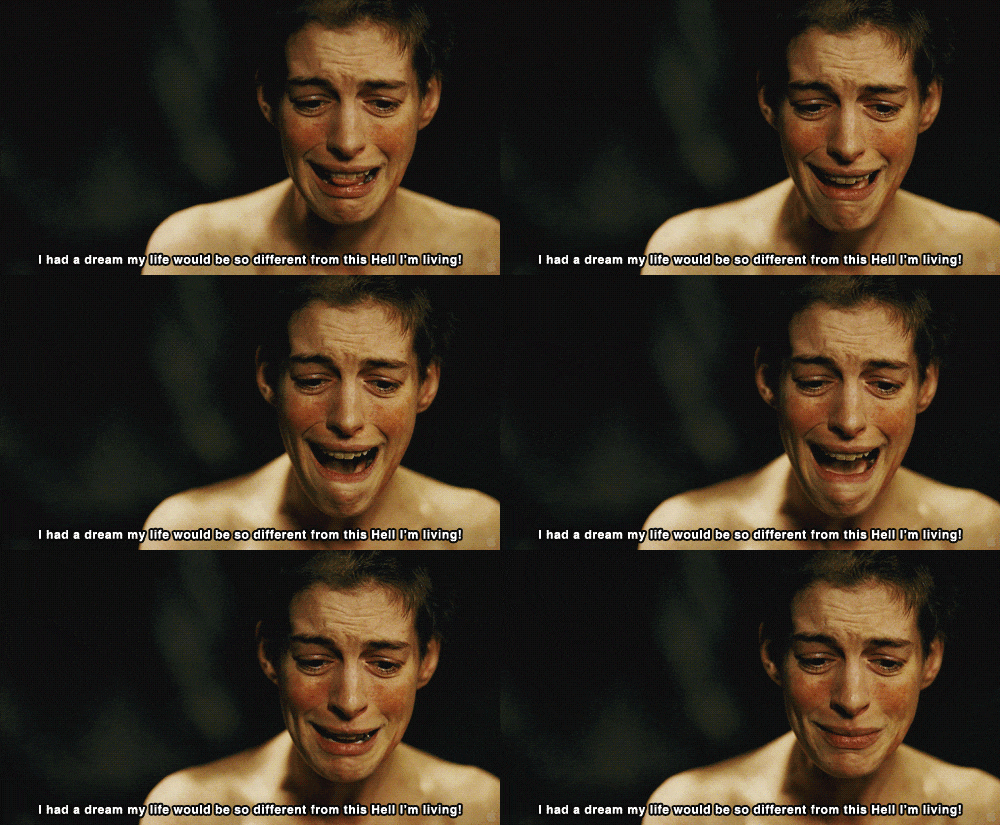
so I was sad.

But there was also a part of me that believed it should be my turn, and I deserved to get picked.

My advice — question this belief.

And notice the things in your life that work out well, when the odds skew ever in your favor.

We get so focused on how life has slighted us, we forget to notice that we can see, hear, walk, and have food to eat.

Dang, I still remember the time a cop just let me go in North Hollywood for talking on my Blackberry without a hands free contraption. She even said, “I don’t know why I’m doing this. These phones make me so mad.”

The next reason for all this audition mayhem is a very human thing that no one’s ever going to change — Middle School.

I’ll explain.

You’ve written a play, and you need folks. Who do you think of first? Your friends, people you KNOW.

If you have to look outside your familiar circle for roles or production support, what do you do? You ask your friends if they know somebody.

What are you looking for?

Someone who’s competent, kind, detail oriented and lives for stage management.

Can you imagine if you were interviewing a company manager, and the candidate said:

?? Can you give me a chance to solve your problem? I mean, I don’t know how I’ll solve it, but just pick me?

or

? Problem? I don’t see a problem here. And I’m amazing, so yeah, here I am. (Sits back and puts shod feet on desk.)

OR

? Hey there. I get it — I see your problem. I’ve solved a lot of these before, and here’s how I can help you solve yours.

Who are you gonna sling a contract at that second and pray they’re available?

Yet actors often bring in versions 1 and 2 into rooms and then get frustrated that their results are crap.

It’s human to want people to pick you for stuff. We want to be chosen. It’s a natural and good desire. When my wife puts her hand on my back and says, “I love you,” I mean, that’s the stuff.

But if we’re talking about getting picked for shows, you need do 1 of 2 things:

Create positive emotional associations to yourself,

OR

pick yourself.

Then create positive emotional associations to yourself. Because no matter how much you pick yourself, if you’re an asshole, no one will want to be in the trenches with you.

If this feels middle school, it’s because it is — because guess what middle schools are full of? People, just younger with under-developed prefrontal cortices.

This bears out in many rehearsal halls, too.

So what can you DO about this? How can you make your auditions and creative life more successful?

First, we are going to define a successful audition:

A successful audition means you prepare well, share the work with artistry, skill, and an open heart, and accomplish the goal you set for yourself in that meeting. It’s a clear preview of how you’d solve a casting problem, and it’s also a glimpse into the straightforward joy it will be to work with you.

That’s it. There’s no outcome component. You’re not going to get the job. Most of the jobs, we don’t get, so dispose of the lie that you have any direct control whatsoever over manipulating a casting decider into picking you.

For more on this, and to really set yourself free, read Audition Psych 101 by Michael Kostroff.

So, to have this successful audition, do this:

Number one, the folks you’re pissed about? Stop paying attention to them. They have nothing to do with you except what you can learn from them.

Number 2, this one’s real simple, but people discount it because it’s not shiny enough.

PREPARE THE SHIT OUT OF IT — and I mean prepare the shit out of it. This means that although you are holding your papers, you’re off book. You have your pitches, rhythms and lyrics in your body because you’ve taken the time to do it.

You understand this person you’re being on a cellular, empathetic, and experiential level.

Confidence only comes from competence, and that comes from your current skill level plus PREP.

And put yourself in the table people’s shoes — how do you feel when the person comes in PREPPED and READY? Exactly — good.

And go ahead and let this boost your ego. If you know you work harder than other folks, let that fuel you. Know that it will pay off because it has to in some way.

The same way that you don’t look for completely fair and equal measures based on your input and output, you can also know that there’s still cause-and-effect in the world.

If you put in the work, if you give away incredible work in the audition room, you’re going to get results. It can only have a compound interest.

If you go in and share fantastic skill with someone who makes casting decisions, and that particular project isn’t a fit for you, you’ve built up artistic goodwill with that decider. It’s just human that they’ll want to pay you back for your investment with them with more opportunities for future projects.

Ego is like butter, salt, heat, and sugar — a little conscious and measured addition in your recipe goes a long way.

Number 2A is also important, and that’s this: Be good.

Have a sober and humble estimation of your skills.

Video yourself. Get a good ears on your voice. Get a wise, incisive and kind acting coach on your storytelling.

What are your blind spots? What are your blocks?

Get in there and work on them and become the electric malleable and expressive performer that you yourself can trust to tell a story with honesty and power. If you know, you can do that, imagine the difference that will make when you walk into a room to share your solution to a casting problem.

And Number 3 —

Have something rich and meaningful going on in your life besides this audition.

Your performing career needs to thrive inside a rich and meaningful life. What do you have going on that gives life to you in life to those around you?

Sit down and write down what’s truly most important to you. Who are your people? Who do you love and who loves you?

And this is dramatic, but effective, and let’s face it, we’re dramatic. When you’re on your deathbed, is this audition or this show opportunity going to be the thing you’re thinking about?

If you’re at an appointment and you know that you have a writers’ meeting later that day on the project that you’ve put together or you’re going to meet up with that friend you haven’t seen in a long time, it’ll set you free to put things in context, and you won’t put value on things that you don’t need to put value on.

What is valuable is your preparation and showing up with excellence so that you prove to yourself that you’re a skilled and generous performer, who has a rich depth of artistry to bring to the table.

So, back to those folks booking all those jobs who clearly don’t deserve it and fill you with indignation. Here are some possibilities to weigh:

Maybe they’re better than you think they are. And maybe just because you understand what a good performance entails doesn’t mean that you’re delivering that yourself. I remember when I realized the gap between my intellectual understanding of the thing and my actual physical execution of that same thing. Ouch. And thank God.

Notice what’s in their energy. It might just be bravado, but there’s something in their energy that communicates “I don’t need this.” They’re not thirsty for connection at the party.

And remember, you don’t know their life. You’re judging a performance aesthetic and skill set, and you’re attaching meaning to their character. Stop doing that. Number one, it’s not your business, and number two, it’s a waste of your time while you could be working a messa di voce exercise to get your head and chest voice making terrific friends.

Comes back to work my acting coach Elizabeth said that time.

You’ve got to stand for yourself, and I’m convinced that having the skill, competence, and preparation underneath you is what will give you a substantial foundation that you can plant your feet on. Do that over and over, and great results will show up in your audition in creative life.

So get in there and do the work. There’s only one you, and folks need to hear the story on the you can sing. Now go sing.
How to Make Belting Feel Terrible — The Ironic Use of Brandi Carlile’s “The Joke” as a Torture Device

The tough thing about the studio I use at school: it sits directly beneath a practice room.

Sometimes it sounds like incidental orchestra warm up.

Sometimes I hear prolonged reed instrument embouchure masochism.

And sometimes singers get in there, and I remember that nobody knows how to practice.

(Sounds like a useful video series. I’d just have to make the title “How to Get Good and Slay Your Foes,” or something like that.)

The other day, though, a diligent person above me at 8 The Fenway decided they was gonna do themselves some high belting.

And they’d decided belting meant making a strong sound with their vocal folds REALLY together all the time.

I understand. That’s a logical thing to think. It’s just that so much of singing is weird and counterintuitive.

I tried to focus on my work, but I just kept hearing this somewhat familiar melody being emphatically forced through this person’s larynx.

My mirror neurons wouldn’t let me notice anything else besides the auditory empathy constricting my throat.

Then there were the vowels.

Oh no, friend, you’re not going to sing that note with that vowel the way you want.

I almost changed into my nobody-asked-me-but-I-must-help Vocal Pathology Avoidance Man superhero costume and bounded upstairs, but I had no time. And that woulda been weird.

Then I realized that somewhat familiar melody was “The Joke” by Brandi Carlile.

I love “The Joke.”

But there was nothing funny about what was happening here. Stop doing this to yourself. And this song.

So, there’s a slew of stuff I could say about the nuanced interworkings of how to make effective Mode 1 (basically chest voice) sounds around and above your passaggio.

But here are three takeaways we can learn while we pray for our friend’s vocal future.

The Voice Comes Through, Not From

The power source for your voice starts in your torso (well, your whole body, really, but, again, another article) — your abs and ribs, depending on what kinda sound you’re making, who you’re being, and what’s happening in the story.

This moves the air THROUGH (yes, yelling at you) your vocal folds and causes them to vibrate.

When folks make belty sounds, the brain somehow decides that the source of the screlt is at the throat level, so the body recruits all kinds of effort around your larynx. No bueno.

The air movement ITSELF helps with vocal fold closure, so when I don’t collaborate with this physical reality, I fight my own body and make things real real hard.

The breath, vibration, and communication energy come THROUGH, not from the folds.

This is also why singing’s so scary and tricky — it’s a flow that you can’t stop and edit before it leaves your mouth.

Belty Sounds Aren’t Just Dependent on Your Folds

Lots of folks think, “Belt? Ok, engage vocal fold slam!”

There are lots of ways to make called-out, excited, risky, wailing, engaged, scream-adjacent sounds. And so much of this depends on your phonatory pattern and the shape of your vocal tract.

And when you discover these ways, you’re gonna be a little angry at how easy they feel.

What we call belting is often one of the most efficient ways to make noise, and it requires a teeny bit of air. Yeah, it’s robust, but the actual feeling of efficient sound making is some crazy return on your breath investment.

Belty sounds also collaborate only with certain vowels.

If you want to look this up, check out Complete Vocal Technique’s work on this, and look up Overdrive and Edge modes. I think their breakdown of this is one of the most straightforward ways of understanding belty sounds. You can also watch a video I did on vowels here.

Your Body Knows How to Belt

The family of sounds we’ve come to call “belting” are all very natural human sounds. That’s why we love it. They’re real, engaging, risky, and the let the emotions through. They’re healing.

So learn to listen to your bod.

And listening to Brandi Carlile is a good lesson in this. She sings straight from her hear guts spirit errythang.

In “The Joke,” the melody of the chorus climbs and climbs — that’s story structure telling you these folks who are laughing one day won’t be.

Just that line, “Let ‘em laugh while they can.”

That “laugh” for 2 beats — what does your body feel when you picture folks pushing somebody down chuckling because they have the upper hand? Do your justice hackles get up? Might that affect how your voice calls our the word “laugh” for 1.5 seconds? Of course it will.

I wrote about the specific how-to right here — how your gut-brain can teach you to sing almost anything.

Super Important Takeaway

And here’s the most important piece of this.

I’ve made the equivalent noises as our friend SHOWING UP and working in the practice room. Good job up there!

I’ve worked really hard and been mystified by how to accomplish a vocal task. I’ve thrown all the spaghetti at all the walls and made the wounded animal noises to prove it. Often in front of folks.

Your voice is resilient. Yes, there’s fragility there, and we have to take care of it.

AND, it’s so strong and capable. Think of all it can do. So trust it. If you feel tired, or anything feels uncomfortable, stop, and don’t do it that way again.

Get help! From someone who knows what they’re talking about. Someone who can demonstrate knowledge about how your physiology, psychology, and soul make sounds.

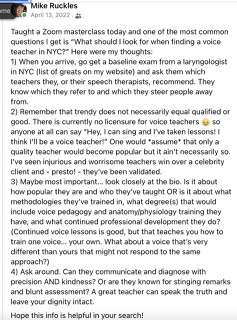
Mike Ruckles in NYC has great advice on this too:

And be kind to you. You’re going to suck at stuff that’s new. Let’s let ourselves be a beginner for heaven’s sake. Talking to myself, too. Oof.

And if you want to learn to make these noises in straightforward, easy ways that make sense, work, and are fun, just reach out and work with me.

I’ve made all the mistakes, and I hear this stuff every day, and it’s my absolute delight to help you sing free, joyful, and heal stuff in the process.

Singing is sneaky like that.

There’s only one you, and folks need to hear the story only you can sing. Now go sing.

CVT’s Research Site

Epic Performance of “The Joke” at The Grammys.

These Helped ?

The question that gets a stumped pause from me now:

“What are you reading?”

Rarely an answerable question for a parent of young children.

My audio book game is strong, though, and I will pop on my new bone conduction headphones (thanks Aunt Sherri!) while I’m emptying the dishwasher to scratch my input itch.

(You know about Clifton Strengths? It’s a tool that tells you what your natural are.)

I always forget mine, but I remember at the top of the list is INPUT. ?

I love to know things, find out things, learn things. And tell YOU about the things.

So I’m sharing some of the most meaningful input sources in my life with you: books.

In no particular order, here you go:
 

Walking on Water by Madeleine L’Engle


From the author of A Wrinkle in Time, this book reflects on L’Engle’s lifelong integration of faith and art.

A few small phrases from this book are always in my pocket when I need context or a little light to see my way.

Letters to a Young Poet by Rainer Maria Rilke

This correspondence between the German poet and a young artist represents a mentorship we all wish we could have.

Makes me long for how we used to get letters, read them a few times, and let their words live in our imaginations while we waited for the next one to arrive. 

If you never read the book, there’s a terrific quote to store in your heart:

“Be patient toward all that is unsolved in your heart and try to love the questions themselves, like locked rooms and like books that are now written in a very foreign tongue.

“Do not now seek the answers, which cannot be given you because you would not be able to live them. And the point is, to live everything.

“Live the questions now. Perhaps you will then gradually, without noticing it, live along some distant day into the answer.”


So brilliant and so frustrating. A thought like that’s not going to get a lot of clicks these days.
 

An Everlasting Meal by Tamar Adler

I’ve told you about this book before. I love it. And there’s a cookbook now.

The book comes from Adler’s blog. She used to cook at Chez Panisse in Berkeley, and the way she writes about bread, beans, and boiling vegetables makes you want to fill up a pot with salty water and get going.

Its theme is based on an earlier book written during the Depression called How to Cook a Wolf. You’ll never look at your chopped-off onion ends the same way again.

And if you like braised beef, you won’t find a better way to do it than in this book. Risotto, too.


Anything by Anthony Doerr

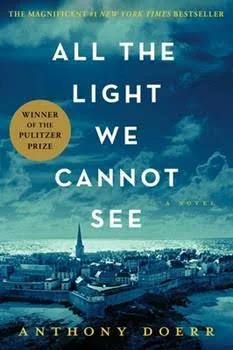
 This year I listened to Cloud Cuckoo Land and All the Light We Cannot See on my walks from the train to work.

When you hear a novelist create such specific and diverse worlds and connect them in such unexpected and inevitable ways, it’s evidence that there’s beauty in the world and goodness and truth in the human imagination.

Both of these books are masterful.
 

Atlas of the Heart by Brené Brown

This book is so important for storytellers — it breaks down the nuance and facets of language we use for emotion.

When our language is clear, connection happens. (Her explanation of the difference between envy and jealousy is fascinating.)

And don’t forget — there’s only one you, and folks need to hear the story only you can sing.

Love much,

Dan

PS You know your Clifton Strengths? Tell me! I looked mine up again —
Input, Empathy, Positivity, Developer, Adaptability

PPS And something to think about — What has it looked like to live a question? What questions are you living right now? 

PPPS Here are those bone conduction headphones I told you about.

Massholes, Bedtime Headache, Good Italian, Impulse Control

This is a blog post that I’m writing because I told myself I would write one every day for the foreseeable future.

I fought through way too much traffic on the Mass Pike (the boys were troopers, though ??), thought a lot about how I want to grow the teaching biz and share more. No epiphanies, but I’m listening.

And now I’m going to bed with a headache.

My brother in law treated us to Italian tonight which was terrific — rigatoni and meatballs in creamy marinara. Thanks Rob.

It was also in the low 80s today, so that’s a plus. Though the boys’ guest room got a little too hot, and they were too excited to go to bed, so I had to tap Melissa in before I hit someone and screamed “you turd!” These are the wins.

I hope you sang a little something today.

The Glitter, Though!

Our Noah bear’s already had his share of dental adventures in his 5 years.

I’ll spare you the saga, but I’m grateful we found a terrific pediatric dentist who’s a menschela with the hands of a micro surgeon. I don’t know if a micro surgeon is a thing, but Dr. Eliasberg would be that.

We’d come through the last of the procedures requiring the “sharp water” (There’s a whole mystery deception language they use with the kids, and it’s brilliant.), when one morning I was brushing Noah’s teeth, and I saw behind a lower incisor ANOTHER tooth growing in.

Wha?

This is a thing that happens. The permanent tooth sometimes wants to make an appearance before the kid tooth gives itself to the Tooth Fairy coffers.

Lordt.

We called Dr. E. What was just going to be a routine cleaning was going to need to be an extraction so the new teeth had somewhere to go.

Dr. E worked her magic again, and Noah emerged from the chair not only okay but proud of his new look. And excited about the milkshake in his future.

That evening, we were out of singles, so while I taught, Melissa put together the mystical dental exchange gift.

She used the only bill she had in her wallet — a cold fresh 20.

And she nested it in its own little ziplock bag surrounded by copper colored glitter.

We’re setting a pretty high tooth bar, here, aren’t we? I mean, I felt lucky when the Magic Molar Maven remembered to drop a quarter under my pillow.

He had been through the tooth wars, though. So sure. Ok.

I slipped in and performed the exchange —which was a challenge. Let’s just say I’m not going to be moonlighting as a cat burglar or a forest tracker anytime soon.

The next morning Noah and Jude came downstairs, Noah holding up his gift with his lower gap beaming.

“Daddy! She came! And she brought me GLITTER!”

Magic was real.

And it was — to see the delight on this kid’s face.

“There is something else in there,” I told him.

He looked closer. “Oh, a message?”

I informed him that there was also a rectangle of green paper representing monetary energy included in his gift. I didn’t tell him it was a 20. The whole dental euphemism glossary has sent me off on a deceit rampage, it seems.

But what would it be to be thrilled by a ziplock snack size of copper colored glitter under your pillow?

I wish for you to have a moment when something feels magical like that today.

And I hope the Tooth Fairy’s fresh out of coins and small bills.

Who Told You to Emote? Stop It. Nobody wants to see it, and it’s exhausting.

Did you ever have the acting teacher who kept poking until you cried?

Somewhere at the Bogfart’s School of Acting Teacher Witchcraft and Gizzardry, there’s a class:

“How to Make Your Pupils Weep So You Can Validate Your Ego and Tell Yourself You Facilitated a Breakthrough.”

Listed as FORCEDSOB 2937-AB in the catalog.

There’s a lie behind this manipulative pursuit, and that porky is this:

If you really feel it, the audience will, too/love you/think you’re great, and you’ll be a real actor.

I mean, maybe.

But storytelling via pretending to be someone else has more nuance than that.

And please review your own history as an audience member. Survey the times you witnessed an actor really feeling things. What was that like for you?

The most generous thought I may have in such a situation is to say, “Wow, they’re really feeling things.”

Yeah, nobody cares.

On the flip of this, have you ever performed a thing of any kind, felt a little struggle bus about it, experienced frustration, and got mad that things didn’t go according to your plan — only to hear feedback later that what you did really moved them?

That’s happened to me several times, and the fact that my own experience of the event was such a poor barometer really frustrated me.

I was frustrated because my MO was jacked; I was trying to engineer maximum audience adoration rather than do satisfying work and tell an honest, excellent story.

And people can smell that shipoopie.

If you’re singing “Still Hurting” from The Last Five Years, and you’re all “Better act brokenhearted now,” you’re about to be a caricature of Sadness from Inside Out, only not endearing.

And here’s a big reason for that.

Emotion is a result of a whole cascade of thoughts, hormonal interactions, and decisions. It’s not the present tense EVENT.

When you focus on portraying a feeling, you’re way behind the actual narrative.

It’s the same as singers being told to “get it forward.” Resonance, like emotions is a result, and if you try to make it the target, you’re a nanosecond behind what’s really happening. I’ll have to write about that.

This is what I mean.

I’m writing this to you. It’s 5:57am, and I’m in the FLOW.

I hear, “DADDDDYYYY! I NEEEEED YOOOOOUUUU!” above me where the boys’ bedroom is, Jude’s daily rooster call.

I feel

  • jarred from my focused state.
  • sweet in my heart because he’s cute as all get out.
  • annoyed that I have to stop work because every morning I think I can complete something before they wake up, and every morning I’m wrong.

I walk upstairs to their bedroom and feel

  • Grateful for their sweet selves.
  • Deeply entertained by whatever Jude’s hide-under-the-covers surprise morning greeting will be. (Today it was his signature ba-da-bing ba-da-boom. It’s hilarious.)
  • anxious that I won’t be able to get my checks checked on my checklist this morning.
  • guilty that I care so much about my checklist.
  • anxious again that I’m not investing enough quality time with them and forebodingly sad imagining the day when they’re older and won’t be so eager to play knights with plastic swords with Daddy.

And that’s just the top layer.

This is why when Melissa asks me, “What are you thinking about?” I’m like, you mean now or 3 seconds ago?

The point is — I don’t even KNOW what feelings are going to pulse through me. I do things. I have thoughts about them. I tell stories to myself about what’s happening, and boom, emotions.

If I train myself to open my heart and do this while being watched by a room full of folks, somehow that becomes an artful and healing thing. How terrific.

But if I’m like, “Okay, time to act nurturing and agitated at once,” I’m already outside myself trying to shellack an emotional quality on my body, and there’s no way I can be inside the story or behind my own eyeballs.

So remember — emotions will always come. That’s what they do.

Just get clear on who’s who and what’s what. Play pretend, have fun, and be surprised by what happens.

It works, I promise. No demonstrative crying required.

Instagram Scam (Smells Phishy) — and the real question we should be asking

I got a message from a mysterious Instagram account asking,

My gut immediately sent up the fishy delete this is suspect alert. And I as I wrote yesterday, I’m trying to get better at listening to those signals.

But I decided to experiment. I told the mystery person I did write, and they said Oh! Would I please write a little personalized bday song for their son turning 4?

I let them know I didn’t have time to do said project, but I knew folks who could.

They weren’t listening.

Somehow once I’ve engaged in a conversation I’m unable just to tap “delete.”

I mean, maybe I can knock out a silly song about Tiger and his puppy in half an hour, slap it on a video and send it to this mystery person for hundreds of dollars.

When I continued the experiment, I said, “Sure, I’ll send you a credit card payment link — you can pay the first half now and the rest when I send you the song.”

Then all this back-and-forth ensued about, “Oh, I can’t do Venmo, and I have to send you a mobile check because I have a domiciliary account (had to look that up)….. “

This whole send you a check from strangers thing is super phishy, and I don’t even understand how these fake check folks net a profit from all this particular grift.

I just told them they’d need a credit card and reported them to IG — I’m sure Meta’s right on it.

But it got me to thinking — the intellectual, emotional (?), and SOUL resources humans all over the globe expend to steal from other folks.

In this case it’s super gross because this person is hunting unsuspecting songwriters on the interwebs and luring them to spend creative energy writing a birthday song for a fictional child.

Maybe targeted songwriter could use some help knocking out that rent this month, so their need for cash might cut off their better BS instincts.

Insta-scam’s gonna take their money, their creative resource, and their time.

Made me ask myself a question, though, and oof:

How do I scam myself on time?

How do I dupe myself into thinking I’m investing my time well when I’m really spinning my wheels and telling myself I’m going somewhere?

The question annoys me and makes me a little angry, so that means it’s one worth asking.

I’ll keep you posted.

Candy Land Usurper

Candy Land is a cruel game.

Masked in sugary rainbow joy colors with sinister smiling denizens populating its simple carbohydrate forests — it’s a trap.

Oh, let’s learn colors. Let’s count. Let’s follow RULES together.

No.

When a four-year-old gets two-thirds of the way to the castle and draws that go-back-to-popsicle-purgatory card, the only result is abject wailing.

And if Daddy draws 2-purple-squares after that, nudging him closer to the syrup throne, wailing turns to candy apple blood vengeance.

Yesterday morning, Jude was so offended by the whims of the Candy Land fates, he swept my blue plastic piece from its spot and zoomed his little green child across the board straight to the candy castle.

“Jude, that’s not how you play it,” I explained with utter futility.

I even reviewed the new word we’d learned the night before reading Prince Caspian: Usurper! In received pronunciation, of course.

Equally fruitless.

By this time, the older brother was witnessing the injustice happening at the whims the Candy Land gods, and he vowed, “I will WIN Candy Land for you, Jude! I’m good at this game!”

While this brotherly solidarity made my heart happy (”Callaways stick together!” we always say), I felt it important to let Noah in on an important truth:

You can’t be good at Candy Land.

Noah’s eyes communicated a paradigm shift cracking open in his noggin. “What?”

“Candy Land is about what card you draw. It teaches you to count AND TO FOLLOW RULES,” I said, for Jude’s benefit of course. (I’m sure he heard me.)

I drew the next card as my little plastic avatar stood at the castle’s peppermint portcullis. It was a mystery chocolate truffle that sent me back to the very beginning of the journey.

“See? Now I have to go all the way back. That’s how this game works,” I explained.

I expected “Ooooh, okay.”

Instead, I got, “Seize the castle while our enemy languishes in the candy floss swamps!”

Luckily, for all of us (because luck is all Candy Land is about — luck and sobbing), Noah vanquished me fair and square by the cards’ oracular proclamations, and he was thus able to find satisfaction for his brother’s earlier demise.

Later that day, we got behind a school bus. It couldn’t make a tricky right-immediate-left situation happen because the Accords and RAV-4s weren’t gonna let big yellow in front of them.

The bus had to do an around-my-ass-to-get-to-my-elbow maneuver to get to where he was going (we ended up following it), and Noah asked, “Why weren’t the people letting him in?”

“Well, buddy,” I said, “driving is like a game of Candy Land. You never know what fellow motorists you’re going to draw.”

And just like Jude, if you showed me a way to slide directly to the castle when the squeezy roads of Framingham slow to molasses-miles-an-hour, I’d take it.

There’s something in here about the Candy Land cards you’re dealt and being a good sport and a gracious winner and rolling with the munches ?, but for now let’s just do our best to count out our spaces on the board with kindness.

And take popcorn breaks as necessary.

Love much.

Don’t Ignore It — How Your Gut Brain Can Teach You How to Sing Almost Anything

When Noah was 1, we took a trip to see his Uncle Rob in Albany.

Here’s little collage from that trip.

We were playing on the living room floor one day, and we opened the front door for some sunshine. I noticed the glass storm door wasn’t fastened all the way, and a gentle gut impulse said, “might be a good idea to close that.

My brain countered, “I’m sure it’s fine. Besides, that would require you lift your ENTIRE person off of this soft carpet.”

Two minutes later, Noah decided to get some vitamin D near the door and leaned against the glass. Poor bug didn’t expect the door to MOVE, and before I could catch him, he was nose-down on the front step.

I felt terrible for not acting on that simple prompt just to click the door latch.

I can’t tell you how many times my guts have sent up a warning flare that I ignored. And every time, I could track back to the moment when the gentle nudge bubbled up followed by the immediate rationalization not to act on it.

Scientists have been learning all kinds of mind-blowing things about our gut-brain, the enteric nervous system.

And you’ve got your own list of gut-negation palm-to-forehead moments. While you don’t have to understand all the science, you and I both know all kinds of information comes from the most surprising corners of our bodies.

This is terrific news for theatre singers.

Here’s why.

When you know your gut has truth to tell, you can turn up your receiver volume when you craft a song.

You understand that your body can teach you to make any sound.

And it’s silly easy. Here’s how you do it.

Take a phrase from your song. Let’s use “My Funny Valentine” by Rodgers and Hart.

We’ll use the lyric, “Yet, you’re my favorite work of art.”

Step 1: Just say the lyric.

Like you’re a robot. Let the meaning and the image occur to you.

I saw a marble statue and remembered my voice teacher Cathy sang this at a wedding many years ago.

And then I remembered a joke that says, “How many cabaret singers does it take to sing ‘My Funny Valentine’? Apparently, all of them.” 

See? all kinds of stuff can generate from one phrase. “Oh the tricks your mind can play.”

Step 2: Say it again.

“Yet, you’re my favorite work of art.” And let more images come. Open your heart to your personal connection to the images.

Now I think about the times I look over at Melissa in the kitchen when we’re in the trenches, and she just looks beautiful. It’s usually when she declares she’s in the depths of frumptastic, but there’ll be a smile line on her face or a little sarcastic aside she’ll say, and I’m grateful we get to share our life.

On another day, something else might come up. Biscuits. Or the Blue Ridge Mountains.

Notice these images may or may not be logically related to the lyric.

Step 3: Notice where your body lights up when you say the lyric and see the things.

You’ll feel emotional energy well up somewhere. It’s often subtle, so tune in. Dial your attention to where your body experiences “you’re my favorite work of art.”

Right now, I’m cozy in my solar plexus, and my throat gets an excited twinge.

Step 4: Now just witness that place with the energy, and sing the phrase while you look at it.

You’ll get key information about your personal relationship to the lyric, and you’ll notice how your body has a clear opinion on how to sound that phrase.

Your head brain will be a little frustrated, too, because the knowledge lives deeper down, and it can’t put it in a spreadsheet.

As you do this work, the phrases become part of you, so when you sing them, they’re arising from images emanating from your own psyche.

And here’s the secret sauce to this whole thing.

You have to open yourself to all the crazy dream-scapey things your subconscious mind tosses up. Just like in life.

You may say, “Yet, you’re my favorite work of art,” and you remember your dad telling you to stop using the front counter railings at the Mt. Airy Burger King as parallel bars when you were in 3rd grade. Brains are like that.

Sometimes you feel blindsided, and you can handle it. You’re a courageous storyteller, and you chose to stand on stages and tell the truth.

And guess what — when you open yourself up to that kind of input rather than trying to traffic-direct every image you meticulously crafted in your homework, you let yourself be a human.

Your brain recognizes that you’re humaning, and you can relax and let the story flow the way it wants to that time. It’ll be different the next.

And who knows — maybe you’ll clear up your gut-brain highway so much, you’ll readily respond when your wise body tells you to close the storm door all the way.

But your consciousness well is going to offer up buckets overflowing with images singular to you, because after all — there is only one you, and folks need to hear the story only you can sing.

Love much,
Dan

Full Fridge Freakout

And two words that dissolve decision fatigue and overwhelm

I have a thing about the refrigerator.

If the grocery cart (carriage, I mean. I’m in New England now) gets really full, rather than thinking something like, “Wow, how grateful I am to be able to get these groceries,”

my mind maps the current real estate in the Kenmore food cooler (empty as it may be), and cortisol levels spike as I imagine stacking the ground turkey and chicken thighs BEHIND the sideways almond milk carton on that obscure shelf just above the crisper drawer.

What If I forget the chicken thighs? I need to SEE what we’re working with.

Melissa, on the other hand, loves her a full fridge. Full fridge = provision and gratitude.

To me, it’s “we better use all of this! And look! Those strawberries are already getting mushy sides. I didn’t SEE that in the store. I shoulda KNOWN not to get the ones from the display!”

The origins of this anxiety are complex. May come from one too many disappointments opening chilled cool whip containers at my grandmother’s house only to discover green beans. What a cruel trick.

I also fantasize about sauntering to the local outdoor market with a macrame satchel, seeing what’s fresh and in season that day, and letting the food, you know, just speak to me. (The last sentence was to be read with a low, breathy tone and sibilant [s]s.)

Comes down, actually, to something very everyday human for me, though: decision overwhelm.

And it’s the reason we have stress hormones injecting themselves into our neurology these days. Living in the US, we’ve got a glut of choices.

And it isn’t good for us.

Even as I write that, I’m thinking, “oh, but I WANT to have the possibility available.”

It’s kind of like when Jude’s in the zone making a magna-tile tower, and he notices Noah carrying He-Man’s little plastic sword. Suddenly, that’s the One Ring to Rule them All.

It’s hard to show up and do the over-and-over thing you might be bored with when so many new shinies sparkle in your periphery.

How do we return to the repeated actions that bring satisfaction and health?

For me, one way is to ask, “So that?”

I’m writing this to you so that —

? I’ll figure out what my fridge thing is about.

?‍? You’ll read about my fridge thing and feel better about your deodorant storage hangup.

✍️ I can record what I was thinking about in July 2023.

? I can write and share something today. That’s satisfying.

? and so that maybe one day a singer googles, “How does full fridge anxiety overlap with musical theatre singing?,” and this article will populate the TOP of the search suggestions.

In anything I do, I want to connect.

It’s why I teach, why I sing, why I cook for people (Ina Garten’s got a great chicken thigh with fingerling potatoes and salad recipe), and why I write.

And if I know what I wrote made your day better, then perfect.

Now I gotta make a grocery list.

« Older posts Newer posts »

© 2026 Dan Callaway Studio

Theme by Anders NorenUp ↑